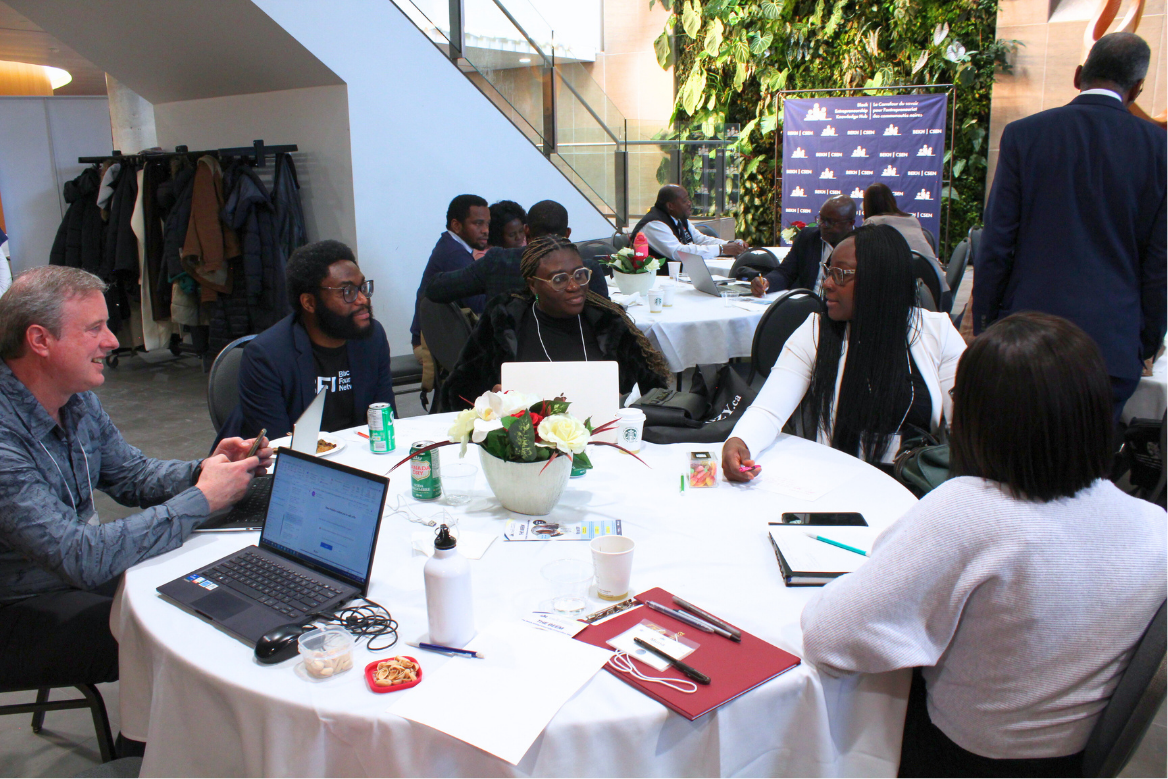
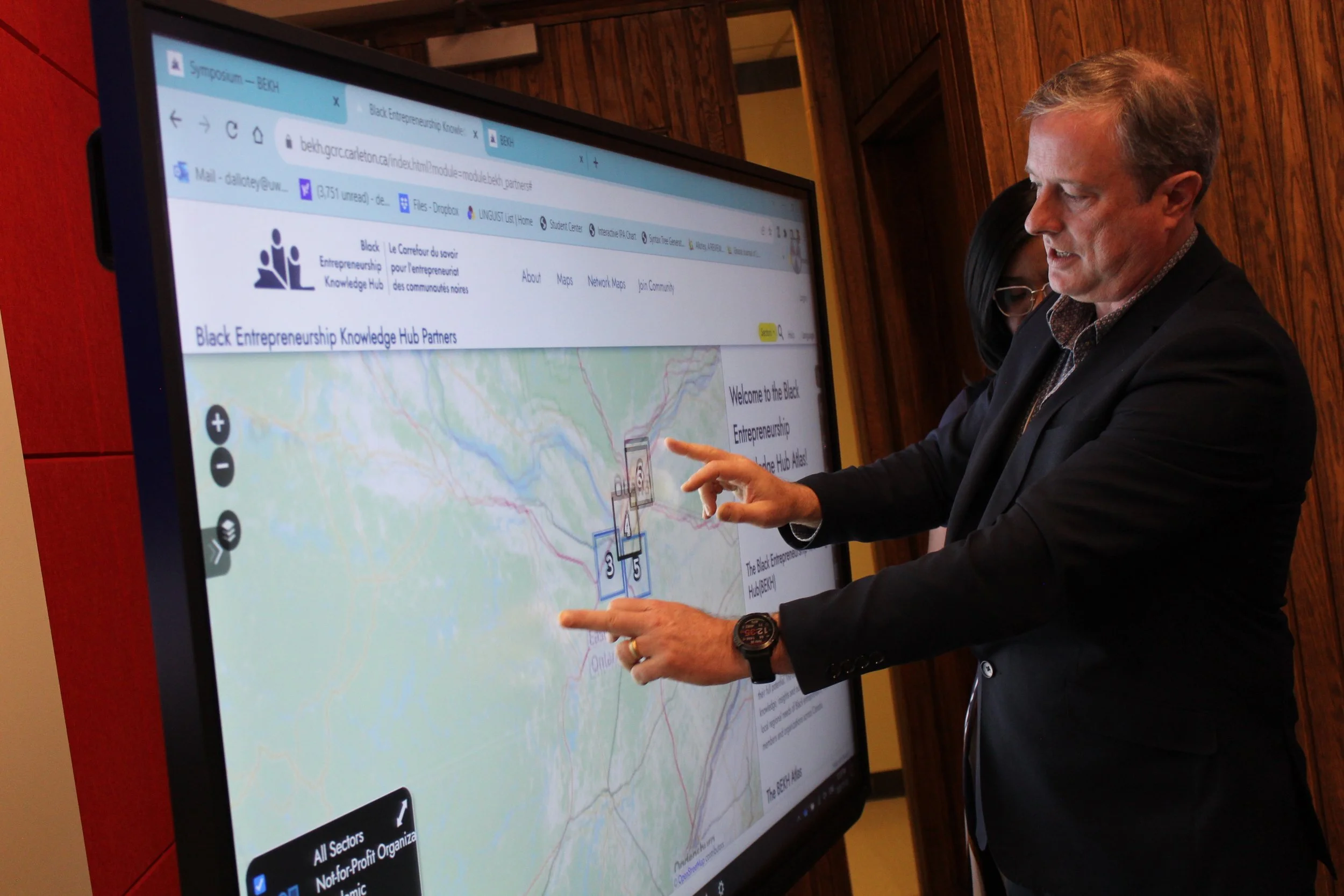
Dr. Peter Pulsifer, Carleton University, Geomatics and Cartographic Research Centre (GCRC)
Knowing where a business is located tells only part of its story. It doesn't tell us which resources it can access, what networks it belongs to or where unmet needs might create new opportunities. Understanding those relationships requires looking beyond individual businesses to examine the wider ecosystem in which they operate.
These are the kinds of questions Dr. Peter Pulsifer brings to his work as technical lead of the Black Entrepreneurship Ecosystem Map (BEEM). When the Black Entrepreneurship Knowledge Hub (BEKH) began exploring the development of a national ecosystem map, it approached Dr. Pulsifer for his experience mapping complex human and environmental systems. As head of Carleton University's Geomatics and Cartographic Research Centre (GCRC), he brought decades of expertise studying how people, organizations and resources are connected.
Dr. Pulsifer has spent more than 30 years working in geomatics, a field that combines digital mapping, satellite imaging, spatial analysis and other approaches to understanding geographic information. Much of that career has involved working with Indigenous communities across Arctic regions of Canada, the United States and Scandinavia, developing systems to map environmental, social and linguistic information. His experience also includes studying human ecosystems and the relationships that connect their participants, expertise that would become central to his work on the BEEM.
Mapping Relationships, Not Just Locations
An entrepreneur's location can influence their access to customers, financing, infrastructure and business support. Yet geography provides only part of the picture. Understanding where opportunities exist also requires examining the relationships between businesses, organizations and institutions, including how resources move between them. "So not just where people are, but how they're connected," Dr. Pulsifer explains.
He is particularly interested in what he calls "the flows or the lack of flow" across the ecosystem. These include the movement of capital between financial institutions and entrepreneurs, the sharing of knowledge through mentorship, the exchange of expertise between industries and the commercial relationships between businesses. Much like a biological ecosystem, where interactions between organisms sustain the wider system, an entrepreneurship ecosystem depends on relationships and exchanges among its members. Understanding how those exchanges function can offer insight into where resources are reaching entrepreneurs and where important connections may be missing.
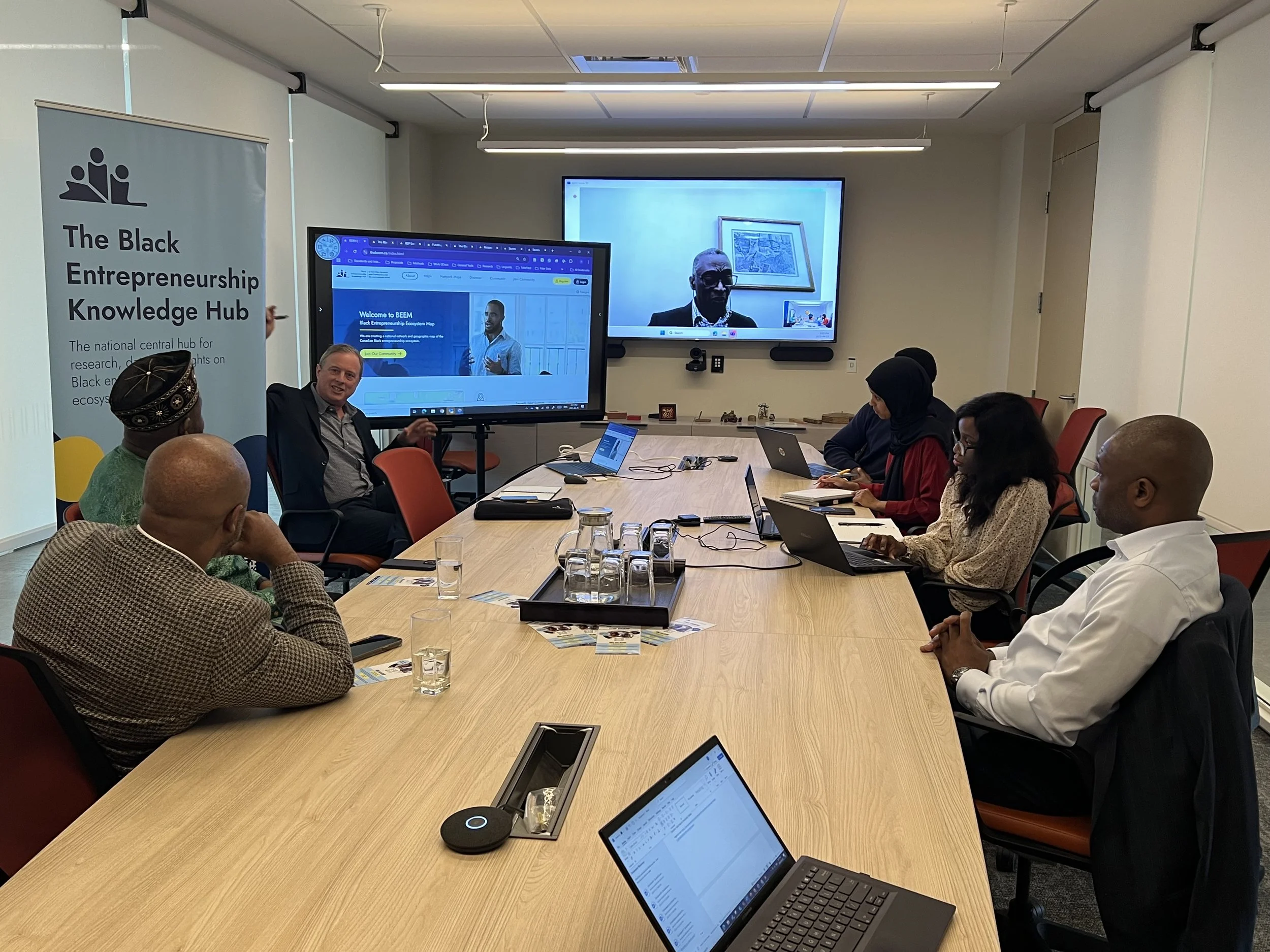
Those relationships are also constantly changing as businesses form, grow, collaborate and enter new markets. Through his work on the BEEM, Dr. Pulsifer has observed how active and evolving Canada's Black entrepreneurship ecosystem is. "There's growth, there's innovation, there's new types of businesses coming up all the time," he says. By bringing geographic information together with data about social and economic networks, the BEEM team is working to understand not only which businesses and organizations exist, but how different parts of the ecosystem relate to one another and what those relationships might reveal.
Finding Opportunities in the Gaps
For Dr. Pulsifer, one of the most promising applications of geospatial research is its ability to reveal patterns and gaps that might otherwise go unnoticed. Consider a food desert, an area where residents have limited access to affordable, nutritious food. By examining where people live in relation to grocery stores and other food retailers, geospatial analysis can help identify communities where access to food is limited. Dr. Pulsifer, who describes his own neighbourhood in central Ottawa as a food desert, sees parallels with the questions researchers can investigate about entrepreneurship.
Where are entrepreneurs located relative to the resources their businesses need? Are financing opportunities and essential services accessible? What challenges might entrepreneurs encounter when establishing businesses in different communities? These are among the questions that could be explored as the BEEM's data and analytical capabilities continue to develop. Dr. Pulsifer explains that researchers are beginning to combine geographic information with data about how businesses and organizations connect, making it possible to examine the ecosystem from multiple perspectives.
As more information becomes available, this approach could support research into regional needs and access to resources. Understanding where businesses have limited access to financing, professional services or business networks could help organizations identify where additional support or stronger connections are needed. For Dr. Pulsifer, the value of this research lies in its ability to move beyond describing existing conditions and help inform decisions about what could be done differently.
Turning Information Into Connection
Of course, identifying an opportunity is not the same as being able to pursue it. A map can help entrepreneurs discover businesses, programs and professional networks, but it cannot establish relationships or ensure that resources reach the people who need them. Despite his decades of experience developing digital tools, Dr. Pulsifer is clear about their limitations. "It needs to have that human interaction," he says, emphasizing that technology is only one part of what makes an ecosystem function.
This perspective has shaped much of his professional career, particularly his work with Indigenous communities, where he has emphasized co-development, an approach in which the people who will use a technology help inform how it is designed and developed. For the BEEM, this means bringing together technical expertise with the knowledge and perspectives of Black entrepreneurs and the organizations supporting them. Dr. Pulsifer believes successful collaboration depends on listening and a willingness among researchers to reconsider their assumptions and understand problems from the perspectives of the people they are working with. Technical expertise can help determine what a platform is capable of doing, but the people who use it are essential to understanding what it needs to accomplish.
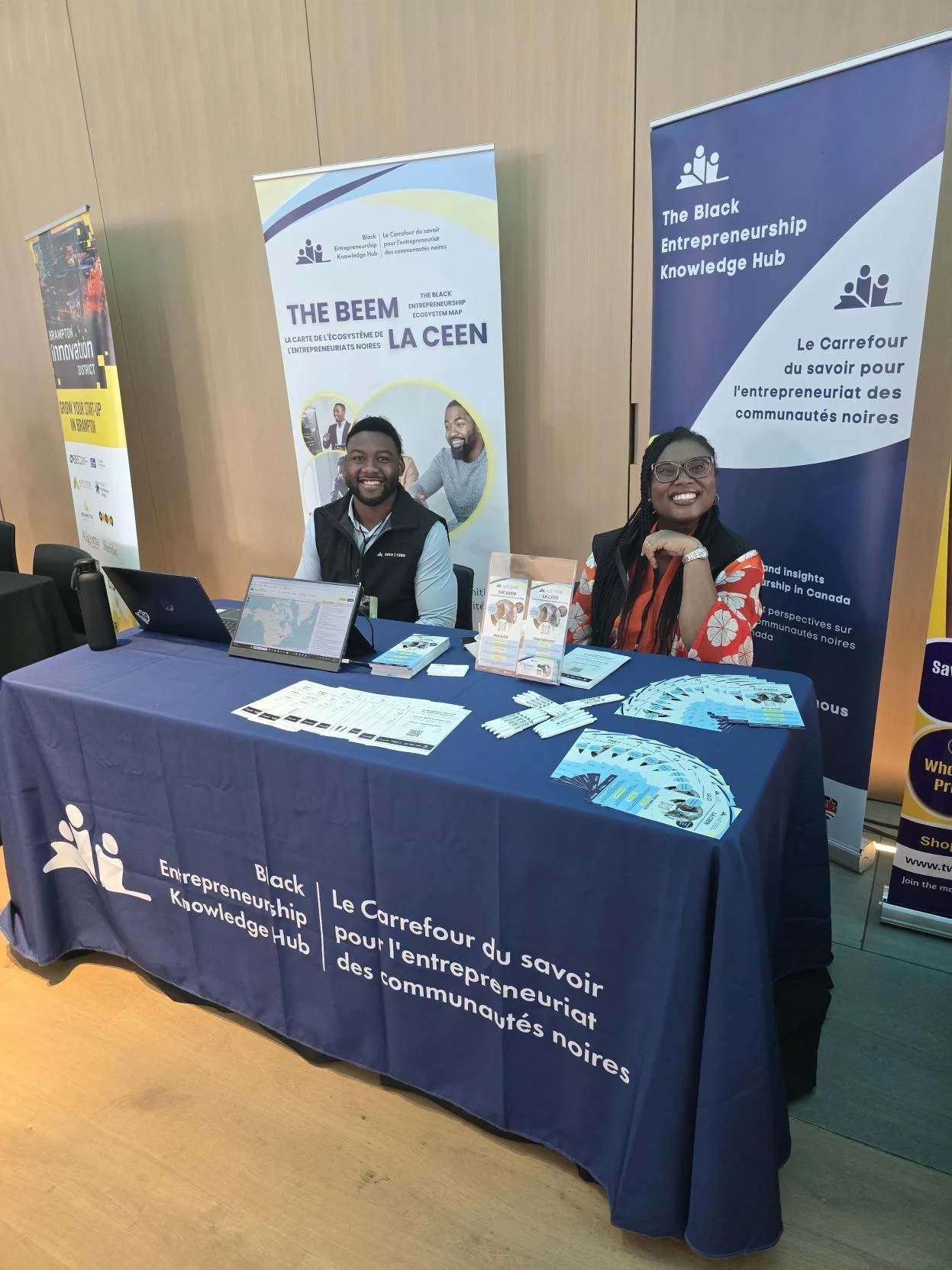
That need for ongoing dialogue extends beyond the BEEM's technical development. Through the BEKH's community engagement work, Deborah Allotey, the organization's Community Coordinator, builds and maintains relationships with Black entrepreneurs and ecosystem organizations across Canada. These relationships help keep the BEKH connected to the people, experiences and perspectives that inform its research and initiatives. For Dr. Pulsifer, this connection between technical development and community knowledge is essential to creating tools that people can use and benefit from.
Expanding What's Possible
As the BEEM continues to evolve, Dr. Pulsifer sees opportunities to develop its analytical capabilities and investigate new questions about Canada's Black entrepreneurship ecosystem. With more information about businesses, resources and relationships, researchers could gain a more detailed understanding of how opportunities are distributed, where barriers persist and how connections might be strengthened.
Emerging technologies, including artificial intelligence, offer additional possibilities for this work, although Dr. Pulsifer emphasizes the importance of examining their ethical implications and potential risks. The approach has also attracted interest beyond Canada, with people in other countries approaching the team about the possibility of developing similar initiatives. His longer-term vision includes seeing the BEEM become a sustainable resource with strong community involvement, capable of continuing to evolve alongside the ecosystem it represents.
Yet among these possibilities, what Dr. Pulsifer finds most rewarding is the growing engagement among Black entrepreneurs. He sees entrepreneurs beginning to recognize themselves not only as individual business owners, but as part of a wider network of people and organizations contributing to Black entrepreneurship across Canada.
For someone who has spent much of his career studying how complex systems function, those connections are an important part of what makes the work meaningful. The BEEM's potential lies not only in revealing where businesses operate or where resources may be missing, but also in helping people understand the relationships and opportunities that exist beyond their immediate networks. By making more of the ecosystem visible, the platform can help entrepreneurs and organizations recognize where stronger connections, new partnerships and shared knowledge could create possibilities that might otherwise remain undiscovered.