How Tichaona Gangaidzo is demystifying the entrepreneurship ecosystem and connecting Black entrepreneurs across Canada

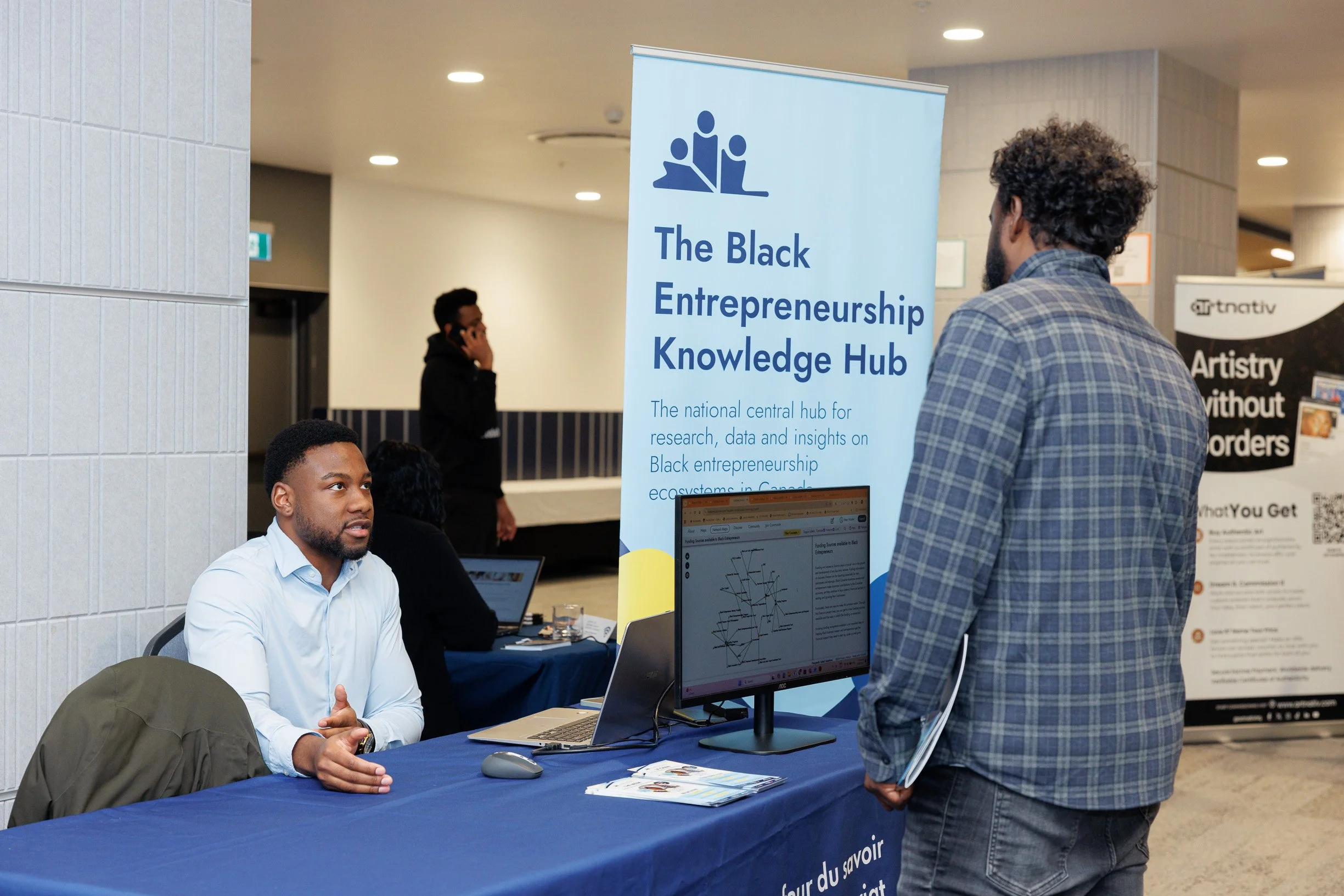
Tichaona "Tich" Gangaidzo, Research Specialist at the BEKH
When Tichaona "Tich" Gangaidzo attends conferences and community events, he isn't just representing the Black Entrepreneurship Knowledge Hub (BEKH). He's listening.
He talks with Black entrepreneurs about the challenges they're facing. He meets organizations providing support in communities across Canada. He asks questions, looks for patterns, and pays attention to what people need. Every conversation helps him better understand the gaps that exist within Canada's Black entrepreneurship ecosystem and how those gaps might be bridged.
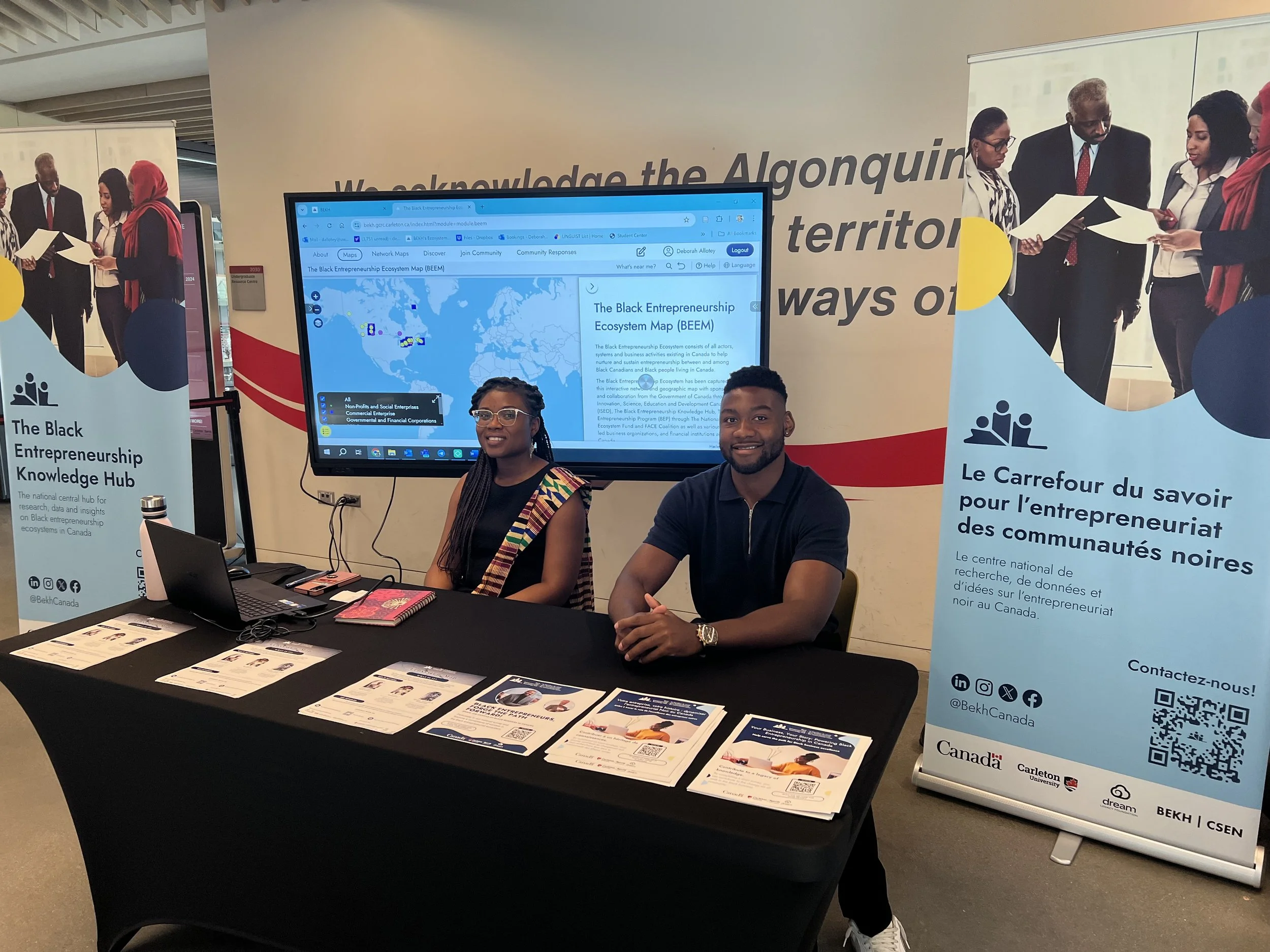
As a Research Specialist at the BEKH, Tich turns those conversations into action. His work helps entrepreneurs navigate the often-complex network of organizations, programs, and resources that exist to support them, while helping the Black Entrepreneurship Ecosystem Map (BEEM) continually evolve to better reflect the needs of the community it serves.
"The BEEM was built by the community and for the community," he says. "It's always good that we have that feedback loop so we're always refining it and it's always in the best shape to be utilized by entrepreneurs."
That balance between people and technology has shaped Tich's career. With a background in information systems, business analytics, and technology innovation management, he has always been interested in using technology to solve practical problems. At the BEKH, he has found an opportunity to apply those skills to something much bigger: making Canada's Black entrepreneurship ecosystem easier to understand and easier to navigate.
Many people think of the BEEM as a directory, but Tich sees it differently.
"I think the BEEM can really step up and serve as the compass."
For someone starting a business, that distinction matters. Entrepreneurship often means navigating unfamiliar territory. Funding opportunities, mentors, legal services, business development organizations, networking opportunities, and government programs all exist, but knowing where to begin can be one of the biggest challenges.
"The BEEM does help guide people to the various opportunities," Tich explains. "However, the responsibility is in the entrepreneur's hands to take advantage of those opportunities."
The platform doesn't replace the entrepreneurial journey. Instead, it helps make the path clearer by bringing together information that might otherwise remain scattered across dozens of organizations and websites.
That mission is reinforced every time Tich meets entrepreneurs.
One finding from the Results and Insights from the 2024 BEKH National Survey particularly stood out to him: more than half of surveyed Black entrepreneurs were unaware of government programs designed to support them. For Tich, that wasn't simply another research finding. It confirmed something he regularly hears in conversations across the country. Support exists, but many entrepreneurs don't know where to find it.
He recalls speaking with aspiring entrepreneurs at a community event who were familiar with only one Black-serving organization. They had no idea there were other organizations offering mentorship, financing, training, networking, and specialized business supports.
"We kind of showed them what their other options were," he says.
Moments like these remind him that demystifying the entrepreneurship ecosystem isn't about creating more programs. It's about helping entrepreneurs understand what's already available and giving them the confidence to access it.
Sometimes, those connections become something even more valuable.
Entrepreneurship can be rewarding, but it can also be isolating. Beyond access to funding or business services, many entrepreneurs simply need someone who understands the challenges they're facing. That's why mentorship is such an important part of the entrepreneurship ecosystem. Through the BEEM's mentorship network, entrepreneurs can discover organizations and experienced mentors who provide guidance, share knowledge, expand professional networks, and offer encouragement throughout the entrepreneurial journey.
Tich remembers meeting a Black entrepreneur who owned a pet grooming business and was looking for someone in the same industry who understood the unique challenges they faced. Through the BEEM, they were connected with another Black entrepreneur in the field.
"They were able to flush out some of the issues," he recalls. "One ended up helping the other one navigate through some of the issues that they were going through."
For Tich, that's what meaningful connections look like. The value isn't simply introducing two people. It's creating opportunities for entrepreneurs to learn from one another, share experiences, and realize they don't have to build their businesses alone.
"It's almost like, through the BEEM, you can get a warm introduction to other people on the platform," he says.
He imagines a future where those kinds of connections become second nature.
"Imagine searching for a developer or a lawyer and being able to find somebody within the Black community to work with," he says. "Those are the kinds of connections we want to help create."
Building those connections also requires trust. Through his conversations with entrepreneurs, Tich has seen firsthand that some hesitate to approach institutions or support organizations because of previous experiences or uncertainty about where to begin.
"We just kind of have to mend the trust between the entrepreneur and the institution," he says. "Again, that's where the BEEM and the BEKH can play a role."
As more entrepreneurs and organizations join the BEEM, every new profile helps strengthen that network. Every conversation helps improve the platform. Every new connection makes it a little easier for the next entrepreneur to find the support, expertise, or mentor they need.
For Tich, that's what connecting the dots is really about. It's about making a complex ecosystem easier to navigate, helping entrepreneurs discover opportunities they may never have found on their own, and building a stronger community in the process.
Asked what he hopes entrepreneurs experience when they use the BEEM, his answer isn't about technology, data, or innovation.
It's much simpler than that.
"It's a sense of community."