Dr. Muna Osman on Why Business Is Never Just Business
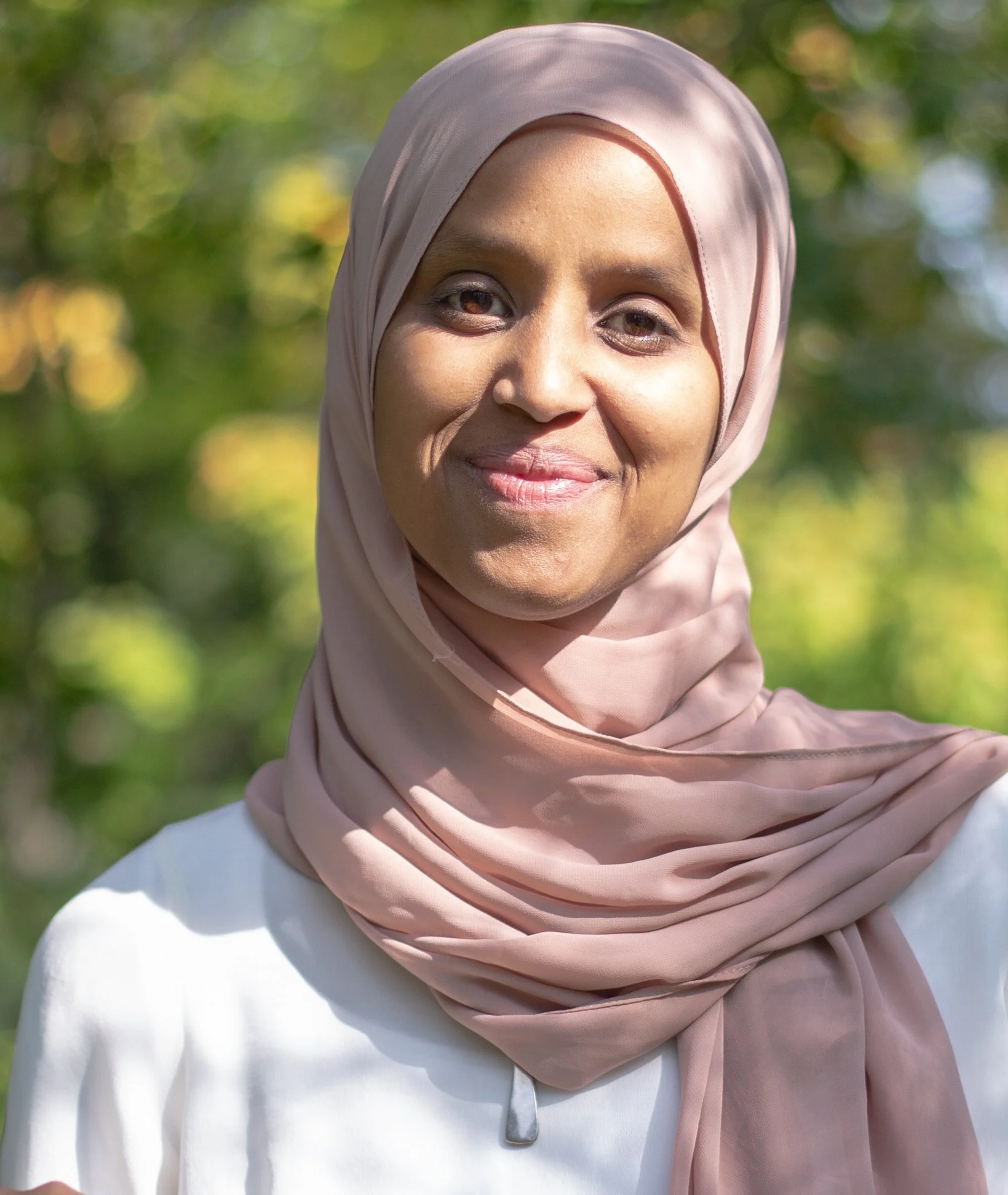
Dr. Muna Osman
A question about research at the Black Entrepreneurship Knowledge Hub could start almost anywhere. How should we measure this? Who should be included? Is this the right methodology? For the past few years, many of those conversations eventually found their way to Dr. Muna Osman.
Muna is a quantitative researcher by training, with a background in psychology and cross-cultural research. She joined the BEKH while the team was developing the National Quantitative Study of Black entrepreneurs, bringing experience from more than a dozen national studies. What looked at first like a familiar research assignment soon became something much more collaborative.
Researchers, Black entrepreneurs, business leaders and community partners were helping shape the study, and even recruitment depended on relationships. Reaching entrepreneurs across the country meant conversations, introductions, answering questions about how the information would be used and giving people a reason to trust the process.
That way of working made sense to Muna for reasons that went beyond methodology. She comes from a Somali family and speaks about growing up with a strong oral tradition and deep respect for elders and others who carry knowledge within community. Academia introduced her to a different way of deciding whose knowledge counted.
“There was very little room to look at community members as holding knowledge, insight in a way that wasn’t captured in the theories that existed,” she says.
Rather than choosing between those worlds, Muna learned to work across both. During her doctoral training in psychology and later research, she became increasingly interested in what formal research could capture, what it could miss and what purpose it served for the communities taking part.
She recalls community members questioning research that seemed disconnected from the questions they were asking or produced findings they could not easily access.
“My accountability first was with the communities I’m connected to,” Muna says. “And if the research and the work fundamentally did not impact their lives in meaningful ways, then it sort of put into question what is the purpose of much of this effort.”
At the BEKH, those questions became part of the work itself. The National Quantitative Study was co-designed with input from Black entrepreneurs, community leaders, researchers and other partners, with more than 100 Black stakeholders contributing at different stages of its development.
“Conducting research for me is about asking questions that impact people’s lives, that they see value in, using a methodology that respects their knowledge and insight, that centers their experiences as we’re answering questions that are relevant to them,” Muna says.
The resulting study provided a national picture of Black entrepreneurship, but it also put numbers behind things entrepreneurs and community organizations already knew. Muna points, for example, to entrepreneurs who were unaware of programs intended to support Black communities. For her, findings like that raise questions not simply about promotion, but about the relationships between institutions and the people they are trying to reach.
The research also showed entrepreneurs finding their own ways through those gaps.
“Entrepreneurs, even when they don’t necessarily have access to all the information and all the resources, they were able to push through and find creative solutions to navigate that system,” she says.
The national picture answered some questions and opened others. Muna became particularly interested in what broad averages can hide. Black entrepreneurs operate across sectors, regions and very different business environments, and the barriers or opportunities facing someone in technology may bear little resemblance to those facing someone in arts and culture, retail or another field.
“As much as the identity of Black entrepreneurs is quite diverse, so is the businesses themselves,” she says. “And they’re going to face different challenges.”
Some of the most interesting lessons from the research, however, have little to do with business metrics. For Muna, Black entrepreneurship has also been a window into the way businesses and communities can sustain one another.
Entrepreneurs may begin with a problem they see around them, drawing on community knowledge, relationships and support as they build a response. As those businesses grow, that support can begin to move in both directions. Entrepreneurs create jobs, circulate opportunities through their networks, meet needs that may not be addressed elsewhere and contribute back to the communities that helped them get started.
“What we saw with Black entrepreneurs is that these two were intertwined in very deep ways throughout the entire process of building a business and continuing to grow it,” she says.
Black entrepreneurs are not simply drawing from community. They are also helping build it.
That reciprocity also complicates the familiar idea that entrepreneurship is purely individual, or that business success is simply a matter of having the strongest idea. Skill and persistence matter, but businesses also grow through introductions, mentorship, trust and access to opportunity.
“As anyone would tell you who’s excelled in a field, individuals have access to opportunities. Doors are open to them. They have mentors. There’s a lot of informal mechanisms and processes that support their business success,” Muna says.
Who gets an introduction, who has someone to call for advice and who is welcomed into the right rooms can be difficult to capture in a spreadsheet. They can also make an enormous difference.
Questions like those are part of why the BEKH is now establishing a National Research Panel of Black entrepreneurs. The panel is intended to create an ongoing way for entrepreneurs to bring their perspectives into national conversations about business and the economy, helping research, policy and programs better reflect the realities they face.
Since leaving the BEKH, Muna has continued her work as a researcher. When she looks back on her time with the organization, the thing she chooses to emphasize is not a particular report, finding or dataset.
“I think what I will sort of take with me to any other work that I do is not so much the outputs, but how we did our work,” she says.
She talks instead about the community leaders who helped shape questions, the entrepreneurs who shared their experiences and the effort to keep those perspectives present from the beginning of a study through to the interpretation and sharing of its findings.
It is perhaps fitting that, after years spent helping the BEKH decide how to ask better questions, Muna leaves the team with a reminder about who those questions are ultimately for.
“We need to continue to be transparent and accountable to community,” she says. “What we are is a conduit to being able to source that insight, build the evidence and the research around what needs to happen, and then to walk hand in hand to push forward the change we’d like to see.”