Why Is Good Food Easier to Dispose Than Donate? How Tony Colley Is Tackling Canada’s Costliest Contradictions
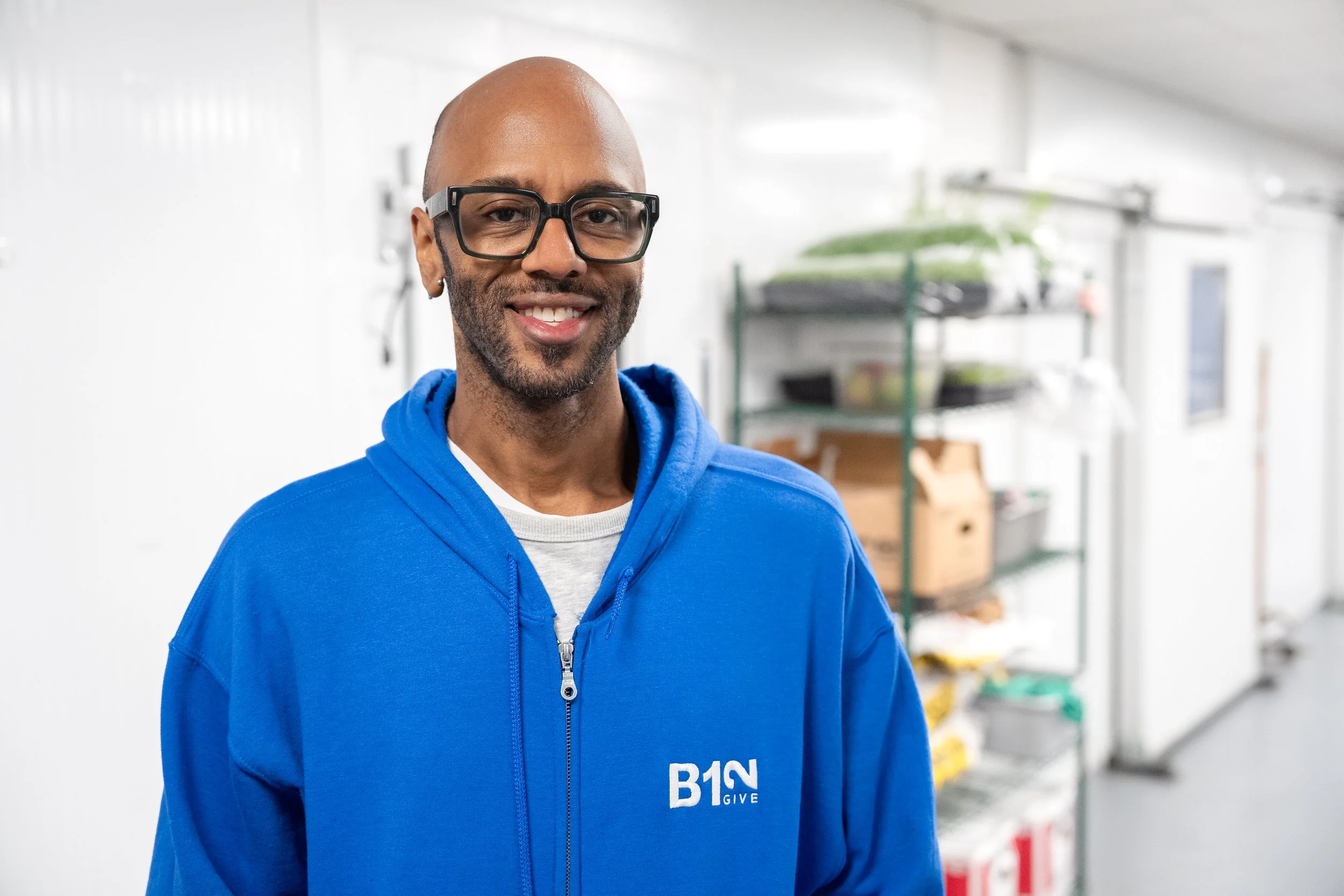
For nearly two years, Tony Colley volunteered to move surplus food from corporate events to charities and community organizations across Toronto. Somewhere along the way, he began asking why getting good food to people who needed it was harder than throwing it away.
The answer would eventually become Be One to Give (B12Give). The Toronto food recovery company grew out of a period in Colley’s life that gave him a rare vantage point on one of Canada’s costliest contradictions.
About a decade ago, after spending 16 years in banking managing large portfolios and building spreadsheets for a living, he moved into fundraising. He eventually left salaried work to try entrepreneurship for himself, combining his fundraising experience with event production work he had done for years on the side.
The venture taught him a difficult lesson. Colley knew how to create and produce an event, but he had not fully worked out how to turn what he was creating into a sustainable business. He invested more than $20,000, exhausted his savings and, after more than a year without a regular paycheque, found himself on social assistance and experiencing food insecurity.
“I was simply in the headspace of creating and producing an event, which are two completely different things,” he says.
The only work he could find was part time with a Toronto catering company. At his first event, more than 100 boxed lunches were left over. Colley, who was struggling to afford food himself, took some home and carried as much of the rest as he could to a shelter by bicycle.
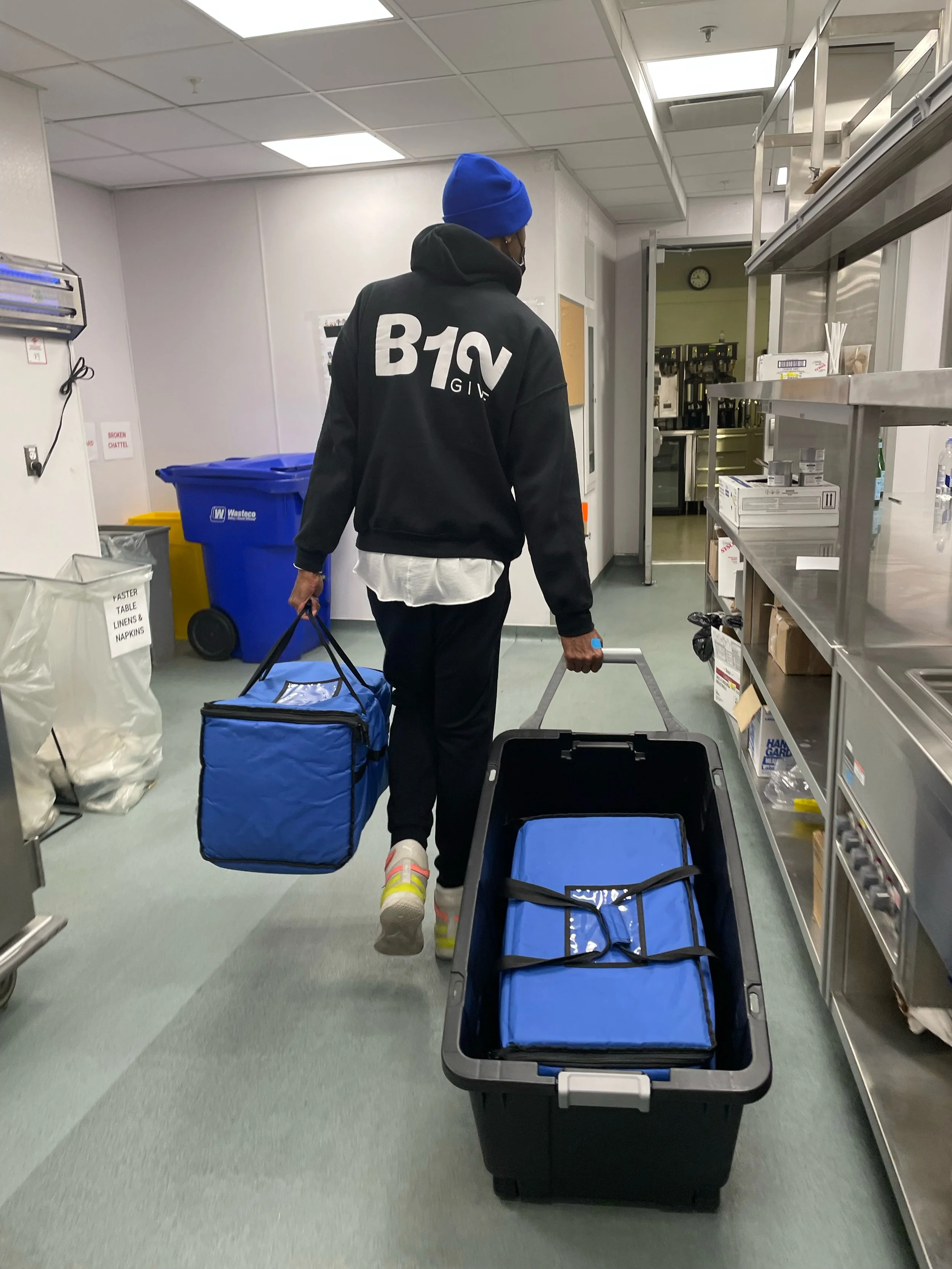
In 2024, nearly one in four Canadians lived in food-insecure households. Even while experiencing that insecurity himself, Colley kept looking beyond his own circumstances, collecting surplus food after catering events and redistributing it to shelters and other community organizations. Reusable grocery bags hung from either handlebar, with more food packed into a backpack behind him.
What began with one event kept revealing the same problem: perfectly usable food was available, people needed it, but connecting the two was harder than it should have been. Toronto food-bank use rose by more than 300 per cent between 2019 and 2025. Meanwhile, across Canada, nearly half of all food is lost or wasted each year, with avoidable food waste alone valued at about $58 billion.
But Colley was determined to help, even if it meant balancing loads of food on a bicycle.
Then one day, while stopped at a traffic light, he watched a food-delivery cyclist pass carrying an insulated backpack.
“I’m like, I need to get one of those bags,” Colley recalls.
The bag cost about $40. Colley bought it so he could recover more food, but almost immediately, his former banking instincts took over.
“If I’m going to spend $40 on a bag to do something as a volunteer for my employer, how am I going to make this money back?”
Why Disposal Has the Advantage
That was when Colley began doing the math. Caterers had surplus prepared food, but so did hotels, universities, grocery stores, conference centres, malls, banquet halls and event venues. Most already had systems for getting rid of it, with bins, waste contractors, scheduled collections and budgets allocated to disposal.
Donation had no equivalent infrastructure.
So, Colley stopped thinking about food recovery solely as an act of generosity and started looking at it as a service businesses could buy.
“If you’re going to pay an organic waste collection company to throw this food in the garbage, then why don’t you pay less to divert it?” he says.
The Hidden Cost of Donation
Historically, businesses could donate surplus food, supposedly as a “free” way of doing good. But charities, shelters and food banks often assumed much of the work and all of the cost required to actually recover it.
“Free does not work for these businesses,” he says. “If free worked, then we wouldn’t have a food waste issue.”
Moving food is never free. Someone has to supply the vehicle, driver, insurance, equipment, refrigeration, storage and staff. If a community organization does not have that capacity, disposal can become the easier option even when a business would prefer to donate.
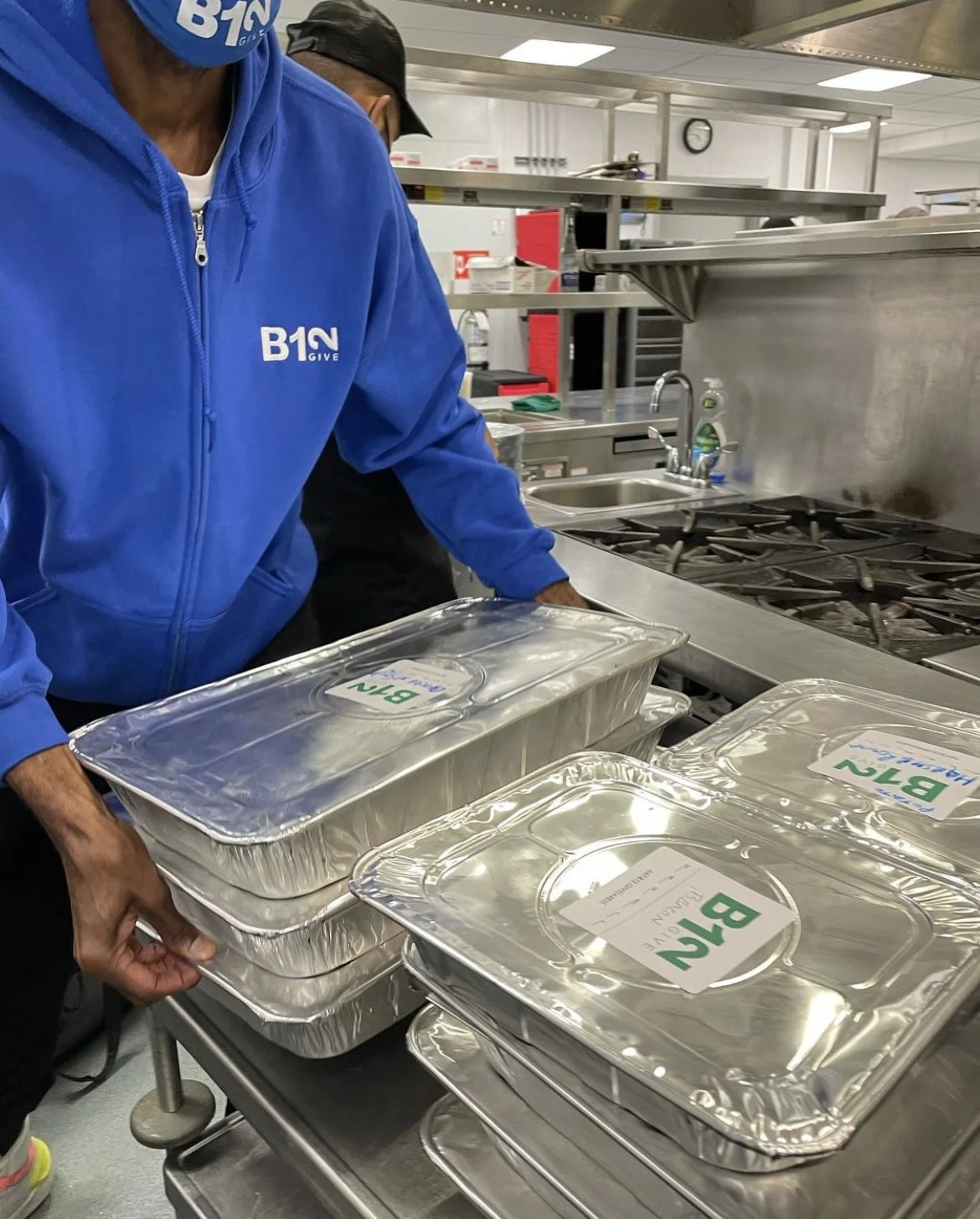
Be One to Give changes the equation by treating food recovery as part of a company’s operations. The business generating the surplus pays for the logistics, while community organizations receive the food.
“The onus is no longer sitting on the nonprofit or the community center or the shelter or the food bank,” Colley says.
The Extra Work of Being Believed
But Colley understood from his first attempt at entrepreneurship that identifying a worthwhile problem was not enough. He had to convince organizations accustomed to handling surplus food one way, to pay a relatively unknown company, to do it differently.
For Colley, making that case also meant discovering how different it felt to enter those rooms without a familiar name behind him.
For most of his earlier career, Colley had worked for two national banks. When he entered a room professionally, he arrived with an institution behind him and rarely had to consider how he would be perceived. As the founder of Be One to Give, there was no bank’s reputation preceding him. There was Tony Colley, a Black entrepreneur, asking large organizations to rethink a problem they had largely accepted as routine.
The shift made him more aware of how much of the sale rested on the person making the case.
Every entrepreneur has to convince customers and partners that they can deliver. But BEKH research suggests that Black entrepreneurs can sometimes enter those conversations with the additional hurdle of establishing their credibility in the face of assumptions about their competence, legitimacy or the potential of their businesses. Researchers have linked those perceptions to consequences for partnerships, financing and growth opportunities.
Colley’s response was not to soften the ambition of the business. It was to make the proposition harder to dismiss.
“I can’t just be an entrepreneur,” he says. “I have to be an entrepreneur plus, plus, plus, plus, plus.”
Turning Impact Into a Business Case
Be One to Give would not simply ask companies to donate food because it was the right thing to do. Colley wanted a business that could serve the community without treating impact and commercial viability as competing goals. BEKH research has found a similar impulse among Black entrepreneurs, with many identifying social causes, community legacy and supporting other entrepreneurs among their long-term goals.
“Food [donation] has been sold as a goodwill type of solution for businesses, when in actual fact, it’s not goodwill. It’s a real, rational, sound business decision,” he says.
The challenge, then, was to make that decision as easy for businesses to justify as any other operational choice. Be One to Give would offer something they already understood: a logistics service with concrete impact metrics.
The company provides same-day, on-demand pickups and tracks what happens afterward, including the amount of food diverted, meals provided, methane emissions avoided and water saved. Those numbers help make the triple bottom line tangible, giving clients measurable financial, social and environmental value they can demonstrate to partners and the public.
By the time the pandemic arrived in 2020, Colley was beginning to build a pipeline of prospective clients. But COVID-19 brought much of the catering and events industry to a standstill. With fewer pickups and clients to pursue, Colley turned his attention inward. He developed the company’s technology, refined the model and began participating in accelerators. The pause gave him something his first venture had not, a more deliberate education in how to build a business.
Colley also sought out mainstream entrepreneurship programs, wanting to learn from people who often resembled the clients he would eventually have to persuade.
“I wanted to make sure that I had as much understanding [as possible about] how to approach those who don’t look like me when I’m selling solutions like mine,” he says.
Inside the Black Entrepreneurship Ecosystem
By 2022, an introduction to DMZ's Black Innovation Program had opened the door to an entrepreneurial network Colley didn’t know existed. Connections followed to Black Founders Network, the Black Entrepreneurship Alliance, Black Opportunity Fund, Nobellum and other organizations.
“Once you get into that ecosystem, other Black entrepreneurship opportunities come about,” he says.
For Colley, one connection made the next easier to find, reflecting a challenge BEKH has identified across the ecosystem. Useful programs, financing and services for Black entrepreneurs may exist without them knowing where to find them. The Black Entrepreneurship Ecosystem Map, or BEEM, is intended to make those programs, funding opportunities and networks easier to discover and navigate.
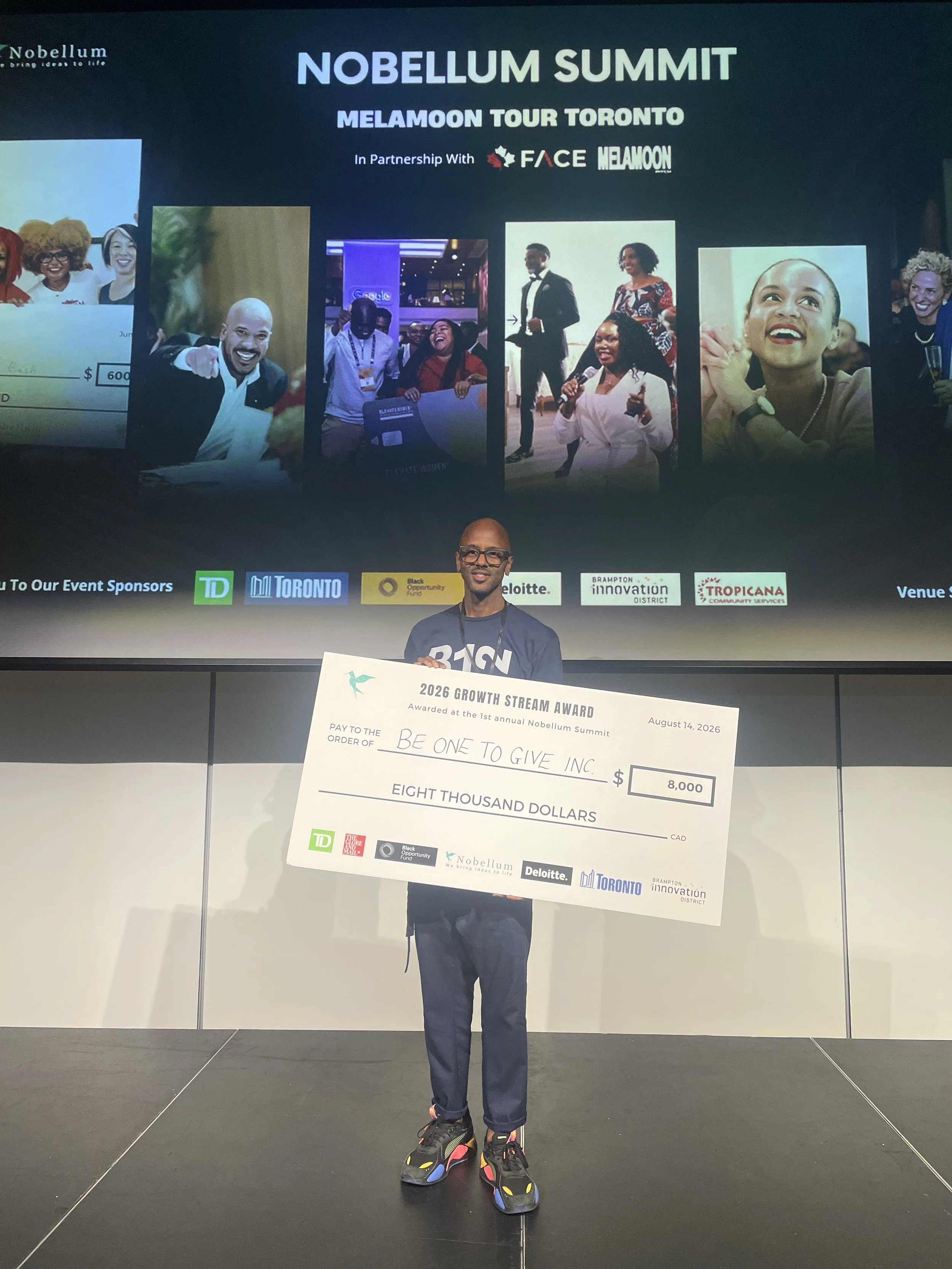
Tony Colley wins second place in Nobellum’s 2026 Growth Stream Pitch Competition on August 14, 2026.
What Colley needs from that ecosystem has changed as Be One to Give has grown. Earlier, money mattered enormously. Now, relationships have become increasingly important.
“Nowadays, it’s really just the network, the advisors, the mentors, the guidance, the know-how,” he says. “It’s the consistency of that, that founders really need in order to take themselves to the next level.”
Be One to Give is still a small business with a much larger ambition. Today, its team of four has recovered more than 115,000 pounds of surplus food. Operating primarily in Toronto, the company uses electric cargo bikes for most collections to reduce its carbon footprint. Its clients and partners have included RBC, Fairmont Royal York and Toronto Metropolitan University, and it has secured pilots with Compass Group and Sodexo, global food-service providers.
Colley ultimately wants surplus food recovery to become routine rather than exceptional. For him, success is not one singular measure.
“I don’t see success as sort of an end goal,” he says. “I see it as a number of steps to get me to the next level.”
That is also how the company began. One catering event led to one shelter. Two grocery bags led to a delivery backpack. A $40 expense led to a pricing question. And a pricing question revealed something much larger about why food can be easier to discard than donate.
Colley has spent the years since trying to make the alternative too practical to ignore, while learning that for some entrepreneurs, there is more to prove before the strength of the business can speak for itself.
“If you feel you have a solution out there that’s viable… work on it. Talk to experts. And if you do, then just build it,” he says. “Don’t ever remove yourself from the competition.”