How cybersecurity entrepreneur Diane Ouandji is showing what’s possible for the next generation of Black entrepreneurs
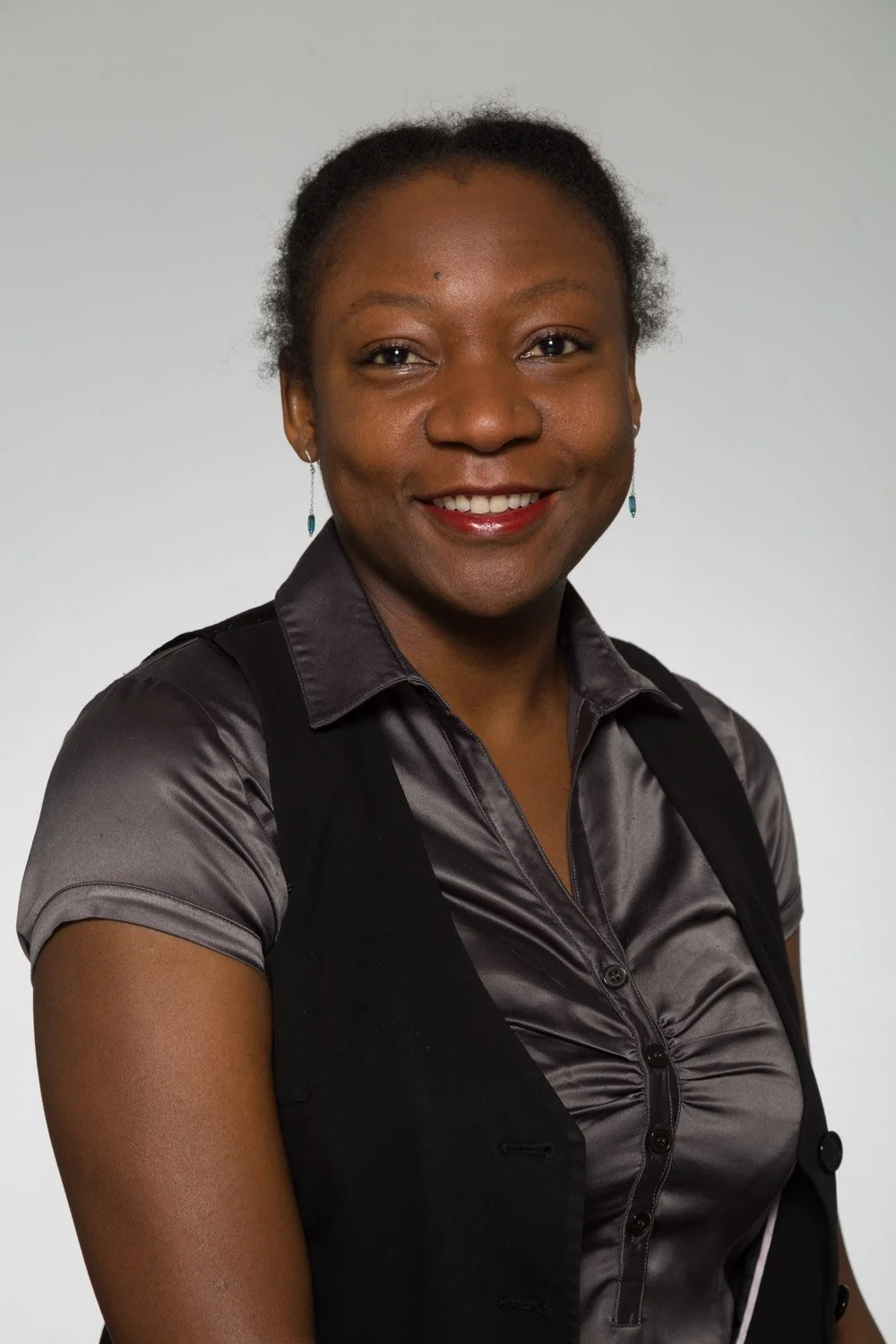
Before Diane Ouandji became the founder of Stratechno, she had already built a successful career in cybersecurity across three countries. She had the education, the expertise, and the experience. Yet there was still one thing no résumé could guarantee. In rooms where she was often one of the few Black women, francophones, or immigrants present, she still had to decide whether she believed she belonged there.
Diane’s answer is simple.
“If I want to get into that room, I’m going to get into that room.”
It is not bravado. It is a philosophy that quietly runs through every part of her story.
Born and raised in Cameroon, Diane was drawn to mathematics from an early age and eventually pursued studies in information security, cryptology, and telecommunications. She built her career in France before moving to Canada four years ago, motivated by the chance to experience a new country and take on a different challenge. More recently, after years of working in cybersecurity, she made another deliberate change. She left the security of an established career to launch a business helping organizations understand and manage cyber risk.
“I had a good career,” she says. “At some point, you need to be in the seat where you are making the tough decisions. Being an employee comes with a sense of safety. There are decisions that you don’t have to make. But for me, that’s the challenge. That’s what I want to do.”
Her decision reflects a broader shift taking place across Canada. Research from the Black Entrepreneurship Knowledge Hub found that 75 per cent of Black entrepreneurs surveyed had started their businesses within the previous decade. Many are using some of their most productive years to build ventures of their own, creating opportunities where established paths may not offer the independence, responsibility, or potential they are seeking.
For Diane, entrepreneurship was not an escape from an unsuccessful career. It was a choice to take greater ownership of what came next.
That choice brought her into yet another space where representation remains limited. There were few girls in her science-focused studies, and the pattern continued through university and into cybersecurity. Entrepreneurship made the absence even more apparent.
“I haven’t encountered many women or Black entrepreneurs in my field, and even fewer Black women entrepreneurs,” she says.
Across Canada, Black entrepreneurs describe having to establish credibility while managing the ordinary demands of launching and growing a business. Research in Quebec found that Black entrepreneurs may have to work harder to establish credibility, particularly in fields such as technology and finance. Some reported having to work harder to convince clients and decision-makers that their expertise met professional standards.
Being Black, a woman, and an immigrant, can shape how others perceive Diane before they understand the depth of her expertise. She does not deny that those judgments exist, but she is careful not to give them more power than they deserve.
“The moment someone is going that low, it means they know I’m competent,” she says. “They know I can do what I’m saying I can do.”
Her confidence does not erase the barriers. It keeps them from becoming the framework through which she evaluates her own potential.
Moving between Cameroon, France, and Canada has also given Diane a broad view of where opportunity can exist. As a bilingual francophone entrepreneur based in Quebec, she understands that language can affect which clients, networks, and markets feel immediately accessible. Yet she encourages entrepreneurs not to confuse the most familiar market with the only one available to them.
Her company may be based in Quebec, but Diane is building it to serve organizations across Canada. Her expertise allows her to work with businesses handling sensitive information, including those in healthcare, financial technology, insurance, and critical infrastructure.
Her outlook is especially relevant in light of BEKH research on Black francophone entrepreneurs in Quebec. Although professional, scientific, and technical services are the most common fields for both francophone and non-francophone Black entrepreneurs in the province, nearly seven in ten primarily serve the Quebec market.
“Think big. Look outside,” she says.
For a francophone entrepreneur, that could mean pursuing clients elsewhere in Canada or recognizing opportunities across francophone markets internationally. Learning to operate in another language can be difficult, but Diane sees it as one more calculated risk in a journey already defined by uncertainty.
“We are talking about someone who is willing to take risks,” she says. “So why not take that risk?”
Her independence does not mean she believes entrepreneurs should build alone. Diane places considerable value on professional communities where people exchange information openly and help one another understand what is changing in their fields.
The right connection can introduce a founder to a potential client, reveal a program they did not know existed, or offer insight into a problem someone else has already learned to solve.
“If you have the network and the contacts, you get in,” Diane says.
Those relationships form a kind of social capital. They influence who hears about an opportunity, who receives an introduction, and who understands how to navigate systems that can otherwise be difficult to enter. BEKH research has similarly identified limited access to professional networks as a major barrier for Black entrepreneurs, restricting their ability to connect with investors, partners, customers, and institutional markets.
The Black Entrepreneurship Ecosystem Map (BEEM) helps close some of that distance by bringing together Black entrepreneurs, support organizations, programs, and ecosystem partners across Canada. By making those resources and relationships easier to find, the BEEM helps more entrepreneurs connect with the people and opportunities that can move their businesses forward.
Diane wants her own business to grow, but her ambitions extend beyond the success of one company. She wants more Black people and more women to see cybersecurity as a place where they can build expertise, make decisions, lead organizations, and create businesses of their own.
She does not believe everyone needs to become an outspoken advocate to make a difference. Visibility itself can carry weight.
“The simple fact that you are in the room can be enough to inspire someone else,” she says. “Just because you are in the room, just because you are on the stage, they are seeing you. So even if it’s not in your DNA to advocate, to speak loud, that’s okay. Be there. Be in the room.”
Her advice to Black women considering entrepreneurship or a career in technology is equally direct.
“If that’s something you want to do, do it. Don’t wait for approval. Don’t wait for somebody who’s going to tell you, ‘Yes, you can do it.’ Do it.”